

We all want to know our star sign. Am I a Libra, a Sagittarius? Most people's first question about Ayurveda sounds a lot like that: am I vata, pitta or kapha? You take a quiz, a result comes up, and with the result comes a list. Eat these, stay away from those.
People come to Ayurveda to get away from strict diets. So when I see it explained as one more list of dos and don'ts, it makes my skin crawl.
Is it wrong? No, but it's incomplete
A quiz can tell you the nature you were born with. A good one can even tell you how you are today. But there's one thing it can't tell you: that this state keeps changing. The season turns, life shifts, you change. The real wisdom is in noticing that change and taking the next step with it in mind. A list can't know that. A list is written once and stays the same.
A list takes you back to the same place
Our Western minds love lists, so we cling to protocols like the vata diet, the pitta diet, the kapha diet. That isn't anyone's fault. Most of us learned how to eat from lists in the first place: calorie charts, forbidden foods, "clean" days and "cheat" days. A dosha list brings back that same hard, familiar mindset: I have to eat this, I mustn't eat that. Only the name of the list has changed.
But when you don't understand the logic and the reason behind it, and life keeps changing, those lists slowly freeze you in place. Every new protocol is exciting at first, then quickly becomes exhausting and impossible to keep up, and you find yourself back at the start. Your plate gets smaller along the way.
Ayurveda's language: qualities
Ayurveda doesn't sort food into good and bad. It looks at everything through its qualities, which it calls gunas. Gunas come in pairs: cold and hot, oily and dry, heavy and light. The rule is simple: like increases like, and opposites bring balance. A body that's cold needs warming, a body that's drying out needs moisture, a body that feels heavy needs lightness.
There are twenty gunas, but with my clients I only look at these first three pairs. Pay attention to just these three and most of the time you'll be eighty percent of the way there. 1 is always greater than 0.
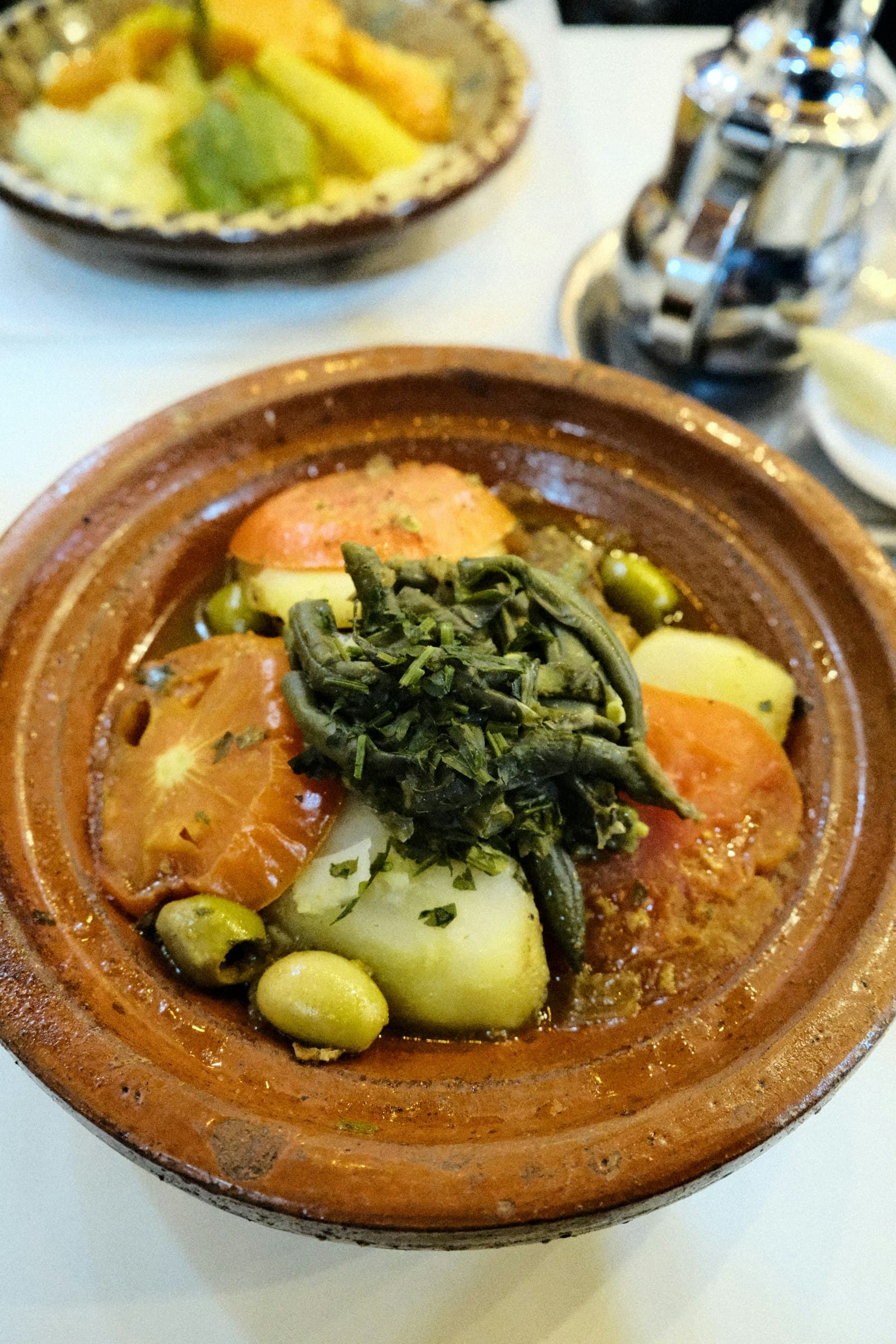
Here's an example. A plate of meatballs and plain rice is a very dry plate. The slow-cooked, slightly brothy stews we make at home in Turkey are balanced on their own. And lightness doesn't mean eating less. It means choosing something with a light quality, like a bowl of soup in the evening after a heavy lunch.
I saw the difference between following a list and understanding the qualities most clearly with one of my clients.
When you're heavy and dry at the same time
After our first sessions, one of my clients started looking up "what's good for kapha" on her own. At our next session she told me, "I couldn't figure out the whole should-I-eat-this-or-that thing." When she looked at herself, she saw both oily and dry.
Her body really was heavy; her weight and her cholesterol showed it. But at the same time, it was drying out. A kapha list would have told her to lighten up and dry out. Yet drying out was exactly what she was already going through. I told her: if you were simply dry, this would be easy. You have both, so we're going to learn how to find the middle ground.

This way of looking at things completely changed her relationship with food. Someone who used to worry over whether to eat this or that told me a few weeks later:
I can eat whatever I want. For example, I haven't put on any weight at all.
So what do you need today?
Do you feel cold today, or is something burning inside? Is your body dry, heavy, or both at once? That's the question Ayurveda always asks, and the answer shifts a little every day. I learned to ask myself these questions the long way round. You don't have to take that long a road to learn them.
When you stop asking which list you belong to, the real question is all that's left: what do I need today?