
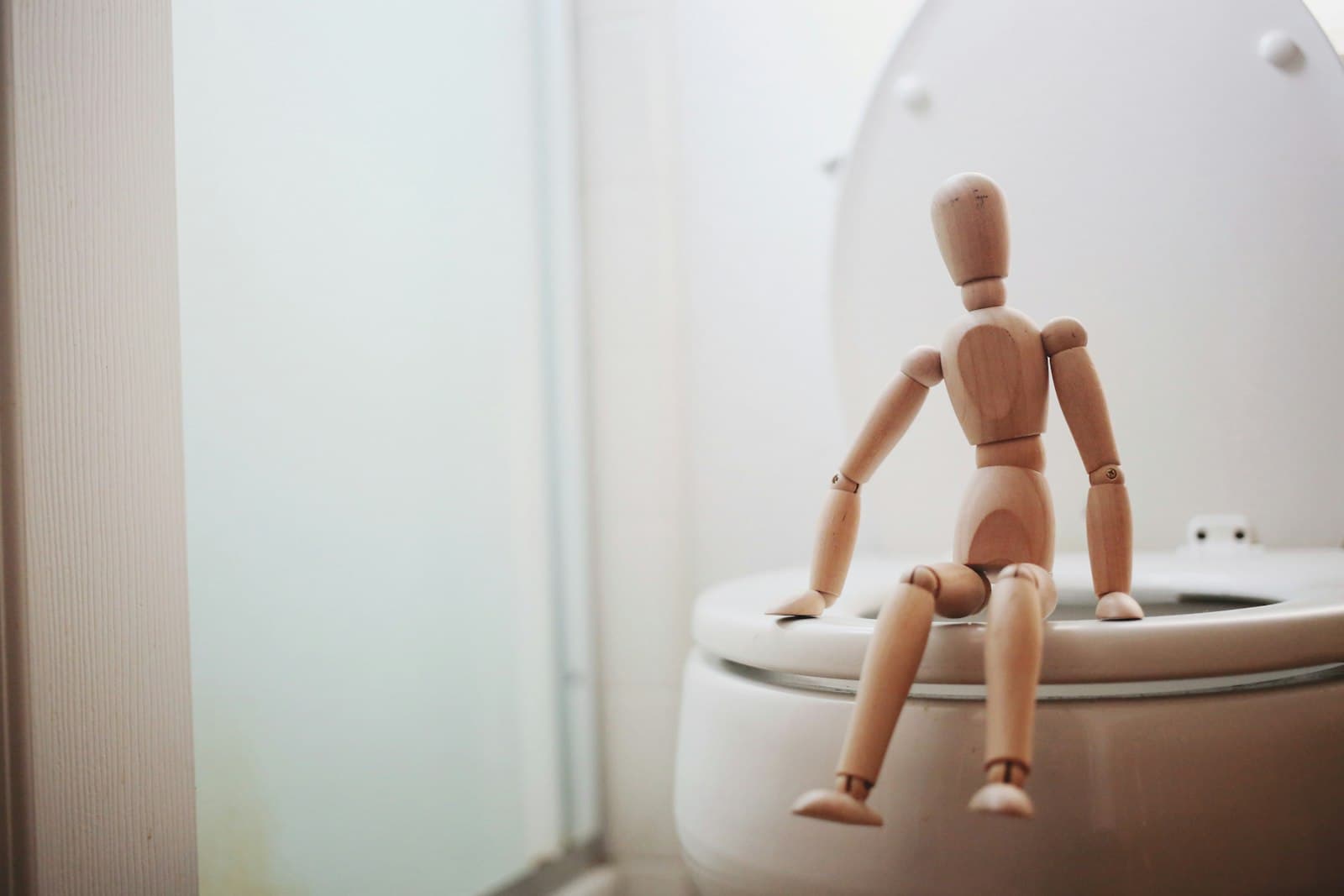
A while ago I talked on Instagram about the energy that comes after a good trip to the toilet. The comments were exactly what I'd expected. "Disgusting." "Run out of things to talk about?" "Don't you have anything better to do?" And a few I won't repeat here.
I had hesitated before posting. Then I remembered something we say in Turkey: you don't stop making rice just because there might be a stone in it.
Because those comments say less about the topic than about how we relate to our bodies. Most of us learned as children that some things the body does are shameful. You don't talk about them. You hide them, close the door and forget. And we did forget, so thoroughly that we stopped looking at the most honest information our body hands us every morning.
First things first: going every day is essential
Whenever digestion comes up, someone tells me straight away: "I don't go every day. My body's just like that."
I know that one well. I said it myself for years.
I went every other day. When I mentioned it, people said, "Some people are just like that, and you're one of them." I believed them. "That's just my body," I said, and left it there. It never crossed my mind that things could be different.
But in Ayurveda, going every day is about as basic as it gets. Ideally, it happens after every meal; once a day is the least the body needs.
Normal and natural aren't the same thing. My own body taught me that.
But going every day isn't enough either
Then there are the people on the other side, who have their answer ready too: "I go every day. No problem there."
This is where Ayurveda goes one step further. It cares less about how often you go and more about how you feel afterwards. The classical texts describe exactly what it feels like when digestion has truly finished. The body feels light. You feel a kind of aliveness, an appetite for the day. Your senses wake up and your head clears. And the body's other natural urges flow without any pushing.
So good elimination isn't a box you tick. It's a feeling that arrives. Like that first glass of water after hours of thirst. The kind of relief that makes you sigh, "Oh, that's better."
If you leave the bathroom still feeling heavy, bloated, or like you're not quite done, your body is telling you something.
Apana vayu: the body's power to let go
Behind that feeling is one of my favourite ideas in Ayurveda: apana vayu.
Ayurveda sees every movement in the body as the work of vata, and vata has five directions, each with its own job. Prana works upward and inward, drawing in breath, perception, the world around you. Apana moves downward and outward. It lives below the navel, in the pelvis, and it carries out everything the body needs to release: stool, urine, menstrual blood. It is also the force that carries a birth through to the end.
Apana, in other words, is the body's power to let go.
It can only do its work when it flows in its own direction. As apana moves down, the body grows lighter. When it loses its way, it starts to reverse, and what should go down begins to come up. Gas, bloating, heaviness in the belly and, very often, lower back pain are among the first signs that apana is out of balance.
When you correct apana, you correct prana too. Maybe that's why your head clears after the toilet. Once the way down is open, the way up can breathe again.
Why does holding it in matter so much?
What wears apana down most is something we do every day without noticing: holding it in.
Rushing out of the house in the morning. In the middle of a meeting. At someone else's house, on the road, on holiday. "Not now," we tell ourselves, and we wait. Once, twice, and then for years.
Most of us never chose this. We learned it at school, at work, in other people's homes. So that no one would have to wait, no one would hear, no one would know. Holding it in is rarely carelessness. More often, it's that early lesson about shame, still living in the body.
Ayurveda counts holding back or forcing a natural urge among the deepest causes of imbalance. Hunger, thirst, yawning, tears and, of course, going to the toilet. Each of these is the body deciding something with its own intelligence. Hold it, and apana can't move down, so it turns back. And when you have to force it, the same pathway grows tired. None of this is anyone's fault. It simply shows you where your body is asking for support.
The body can let this pass once or twice. But when holding it in becomes a habit, the urge grows weaker, and after a while it stops coming at all. And we accept it. "That's just how I'm made," we say. Exactly as I did for years.
So how do you feel?
Maybe you've never thought about it this way. For years, I didn't either.
But every morning, your body gives you a small answer. Do you feel lighter, or are you still carrying something heavy? It might feel like a strange question, maybe even a little "disgusting". But what your body tells you is usually much simpler than you'd think, and much more honest.
You might be wondering
How should I feel after a bowel movement?
Light. In Ayurveda, the body and belly feel relieved, you want to get on with your day, and your mind feels clear. If you still feel heavy, bloated or not quite done, your body is telling you something.
Do I need to go every day?
Yes. In Ayurveda, daily elimination is one of the body's most basic functions. Going every other day is common, yet Ayurveda doesn't see it as natural. And going every day isn't the whole story; how you feel afterwards matters too.
What is apana vayu?
In Ayurveda, apana vayu is the part of vata that moves downward and outward. It sits in the pelvis, moves stool, urine and menstrual blood out of the body, and carries a birth through to the end. In short, it is the body's power to let go.
Is it bad to hold it in?
Ayurveda counts suppressing natural urges among the deepest causes of imbalance. When you hold it, apana can't move down, so it turns back. Most of us learned this rather than chose it, but once it becomes a habit, the urge itself grows weaker.
That discomfort is really a door. Behind it is a question: when did I become such a stranger to my own body?